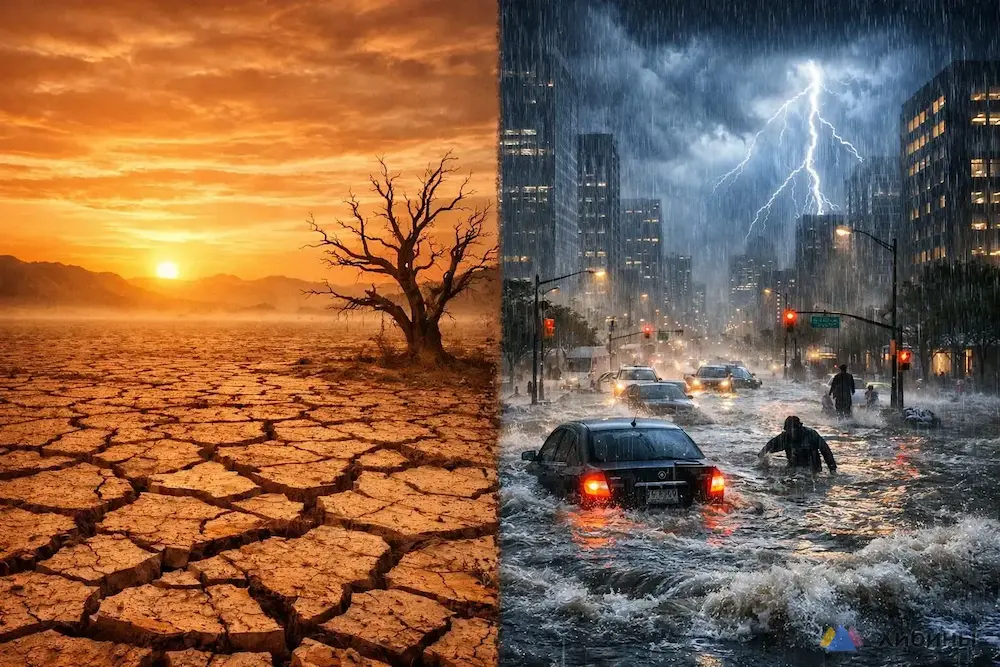
Scientists are increasingly warning about the likelihood of a large-scale climate anomaly — the El Niño phenomenon, which is capable of dramatically altering weather patterns across the planet. This refers to a significant increase in the temperature of surface waters in the equatorial Pacific Ocean, triggering a chain reaction of extreme events: prolonged droughts, destructive floods, wildfires, crop failures, and, as a result, rising food prices, intensified migration flows, and threats to food security.
According to experts’ forecasts, one of the most intense El Niño events in recent decades could form in 2026. The situation is worsened by the fact that the planet’s average temperature has already risen significantly, meaning the climate system is becoming more unstable. This increases the likelihood that the consequences will be far more severe than in the past: some regions will face acute water shortages, others will be threatened by large-scale flooding, while others will experience extreme heat and fires.
Historical examples confirm the destructive power of this phenomenon. One of the most severe El Niño episodes at the end of the 19th century, in 1877, led to catastrophic global consequences — according to various estimates, tens of millions of people died due to famine and related crises.
Interestingly, El Niño is only one phase of a more complex climate cycle known as ENSO (El Niño — Southern Oscillation). Its opposite phase — La Niña — can cause directly opposite effects, including cooling and increased precipitation in certain regions. However, it is the strong El Niño phases that most often become triggers of global economic and humanitarian disruptions.
Modern climate models indicate that with the intensification of global warming, such events may become more frequent and more powerful. This means that countries around the world need to adapt already: developing early warning systems, strengthening infrastructure, and rethinking approaches to agriculture and water resource management.