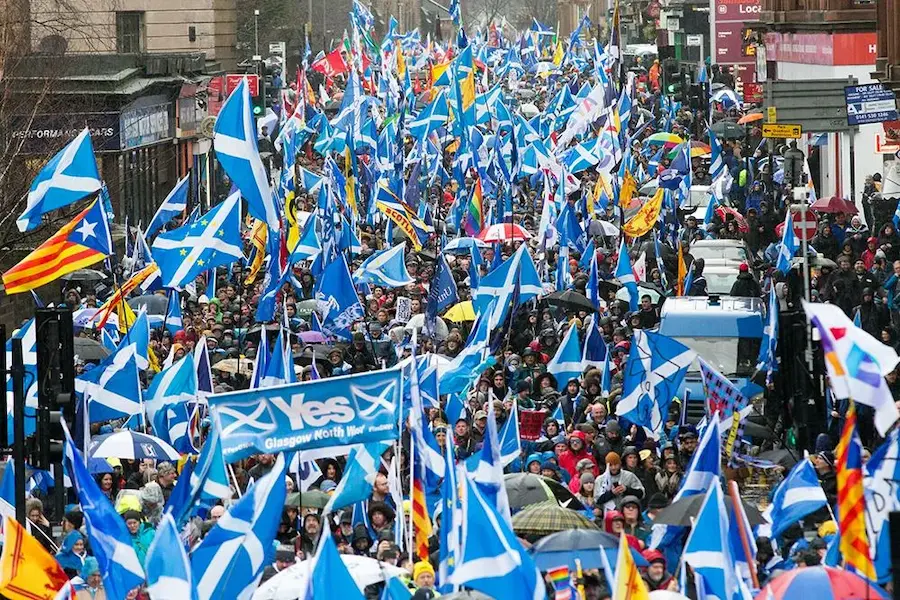
The Scottish Parliament has supported an initiative to hold a new referendum on the region’s withdrawal from the United Kingdom, according to representatives of the Scottish government. The decision has once again reignited discussions about the future of the British state and the prospects for redistributing powers between London and the national regions.
Experts note that Scotland’s potential independence could lead to significant political and economic changes for the United Kingdom. In the event of separation, the country could face a revision of its budgetary system, changes to the structure of state institutions, as well as questions regarding the division of national assets and liabilities.
For the United Kingdom itself, such a scenario would represent one of the biggest political challenges of recent decades. In addition, Scotland’s separation could affect London’s position on the international stage and alter the balance of power within the state.
Developments surrounding the Scottish issue are also being closely monitored in Western European countries. Analysts believe that the successful holding of such a referendum could become an important precedent for other regions with strong autonomist or separatist sentiments. Frequently cited examples include Catalonia in Spain, Flanders in Belgium, and several other territories where the issue of expanding self-governance periodically returns to the political agenda.
Against the backdrop of growing discussions about national self-determination, the decision of the Scottish Parliament could have an impact not only on the future of the United Kingdom but also on the development of regional policy throughout Europe.
What Are the Reasons Behind Such Sentiment in Scotland?
The desire of some Scottish residents for independence has developed over decades and is linked to several factors at once.
Historical Identity
For centuries, Scotland existed as a separate kingdom and retained its own legal, educational, and cultural institutions even after unification with England in 1707. Many Scots view their national identity as distinct from British identity.
Political Differences with London
One of the main reasons is the difference in political preferences. Scottish voters are more likely to support centre-left parties and socially oriented policies, while conservatives hold significant influence in England. As a result, many people in Scotland believe that decisions made in London do not reflect the will of the Scottish majority.
The Consequences of Brexit
The referendum on the United Kingdom’s withdrawal from the European Union became a powerful catalyst for separatist sentiment. In 2016, around 62% of Scottish voters voted to remain in the EU, yet the country’s overall decision was the opposite. For many supporters of independence, this became an argument in favor of pursuing their own course and the possibility of seeking integration with the European Union again in the future.
Economic Arguments
This is a more significant factor. Many residents of Scotland criticize London for:
- austerity measures;
- problems within the healthcare system;
- the rising cost of living;
- regional inequality;
- insufficient investment in certain industries and regions.
Supporters of independence argue that Scotland possesses sufficient resources for independent development. Frequently mentioned are the oil and gas fields of the North Sea, renewable energy, the financial sector, tourism, and export industries. In their view, a Scottish government could manage these revenues more effectively.
Governance and Powers
Despite having its own parliament and broad autonomy, part of the population believes that key decisions regarding the economy, foreign policy, defense, and migration should be made directly in Edinburgh rather than in London.
Generational Changes
Polls indicate that support for independence is often higher among younger people than among older generations. Younger voters are more likely to associate Scotland’s future with European integration and view independence as a way to implement their own political and economic model.