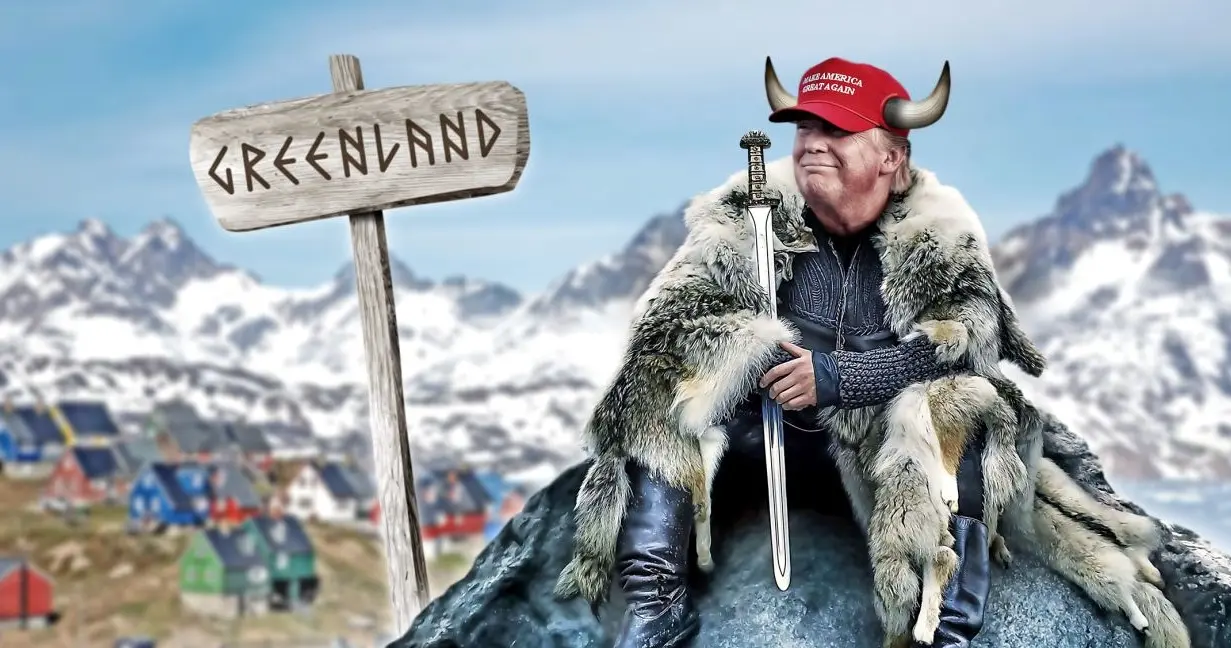
The United States may take Greenland under its control in the near future — within the next few months. This is reported by Politico, which points to several time frames considered the most likely.
Sources interviewed by the publication, including analysts and government officials, believe that key developments could unfold either before the U.S. midterm congressional elections scheduled for November or, with even greater likelihood, before the celebration of the 250th anniversary of U.S. independence on July 4. The possibility of such a scenario is described by sources as real and serious.
At the same time, according to experts, Washington is unlikely to act through a hard military scenario. Instead of open military pressure, the United States may rely on diplomatic and political tools, including influence over local elites and informal arrangements with Greenlandic politicians.
The potential establishment of U.S. control over Greenland could cause serious divisions within NATO and the European Union — possibly even more acute than the current disputes over support for Ukraine. Analysts emphasize that in the event of a conflict of interests, Denmark is unlikely to receive the same level of international support that was provided to Kyiv.
Possible consequences
If the scenario of increased U.S. control over Greenland begins to materialize, it could lead to long-term geopolitical shifts in the Arctic region. Greenland occupies a strategic position at the intersection of key northern maritime routes and also possesses significant reserves of rare earth elements that are critically important for the defense industry and high-tech sectors.
For Europe, such developments would represent a serious test of political autonomy. The strengthening of Washington’s influence could weaken Denmark’s position and call into question the real sovereignty of smaller EU states in security matters. In addition, tensions within NATO may grow between supporters of a rigid Atlantic course and countries advocating greater strategic autonomy for Europe.
An equally important factor will be the reaction of other Arctic powers — primarily Russia and China. The expansion of the U.S. presence in Greenland could accelerate the militarization of the Arctic and trigger a new phase of competition for control over resources and transport corridors, which in the long term would increase the risks of instability in the region.
On the other hand, there is a growing perception of a “backroom deal” among the world’s largest geopolitical centers — primarily Russia, the United States, and China — where strong powers negotiate with other strong powers and divide spheres of influence. If this is indeed the case, we may witness the formation of large regional powers with absolute dominance within their respective regions, each representing a “state-civilization.” Whether such civilizations will integrate with one another or continue to confront each other remains to be seen.