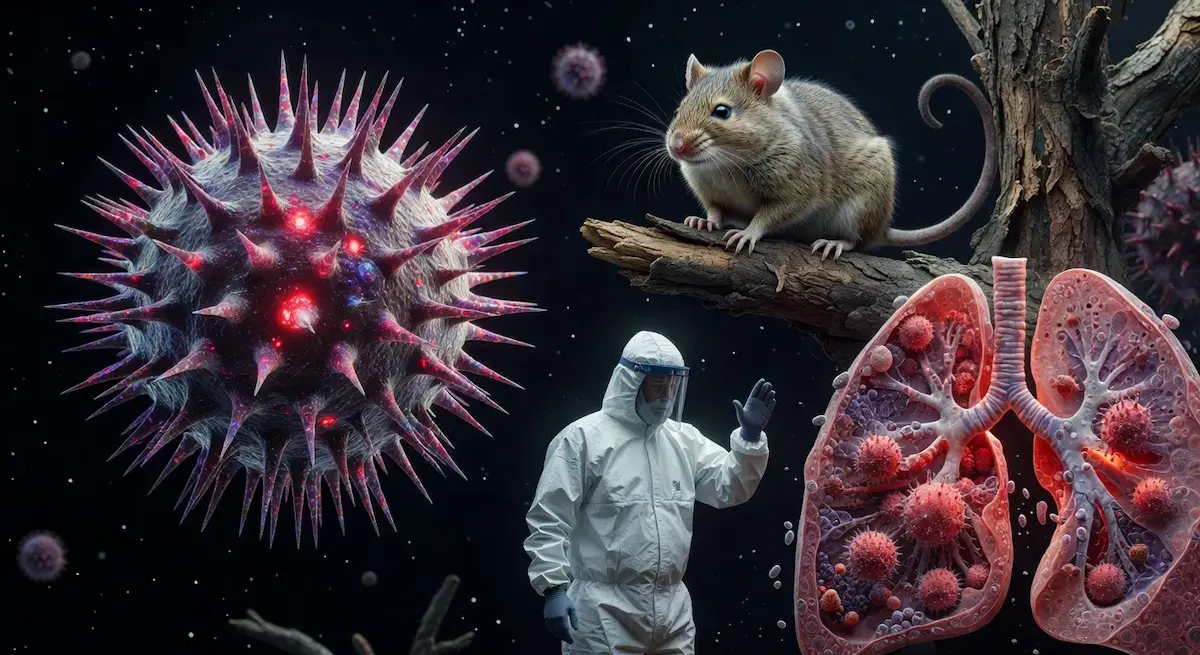
Hantaviruses are a group of viruses that primarily circulate among wild rodents and can be transmitted to humans through contact with their saliva, urine, or feces. Infection most often occurs not from person to person, but through the environment—for example, by inhaling dust in areas where infected animals live.
Unlike respiratory viruses such as COVID-19, hantaviruses do not spread as efficiently within the human population. This is why most recorded cases of the disease are local and sporadic rather than large-scale pandemic outbreaks.
Among the diseases caused by hantaviruses, the most well-known are hantavirus pulmonary syndrome (HPS) and hemorrhagic fever with renal syndrome (HFRS). These infections can be severe and even life-threatening, especially when medical attention is delayed.
Early symptoms often resemble a common viral illness: fever, weakness, and muscle pain. However, in severe cases, there may be rapid damage to the lungs or kidneys, requiring urgent hospitalization.
Despite periodic media and social media attention, the scientific community does not consider hantavirus a factor capable of causing a global pandemic on the scale of COVID-19. This is due to the specific nature of its transmission: a limited ability to spread between humans and a strong dependence on natural reservoirs—rodents.
It is also important to understand that the internet often features interpretations or “predictions” of future epidemics that are not based on scientific data. Real epidemiological risk assessments are carried out by international health organizations based on outbreak monitoring, genetic analysis of viruses, and models of infectious disease spread.
Thus, hantavirus remains a dangerous naturally occurring pathogen that requires monitoring and prevention, but at present it is not considered one of the viruses with a high probability of causing a global pandemic.